

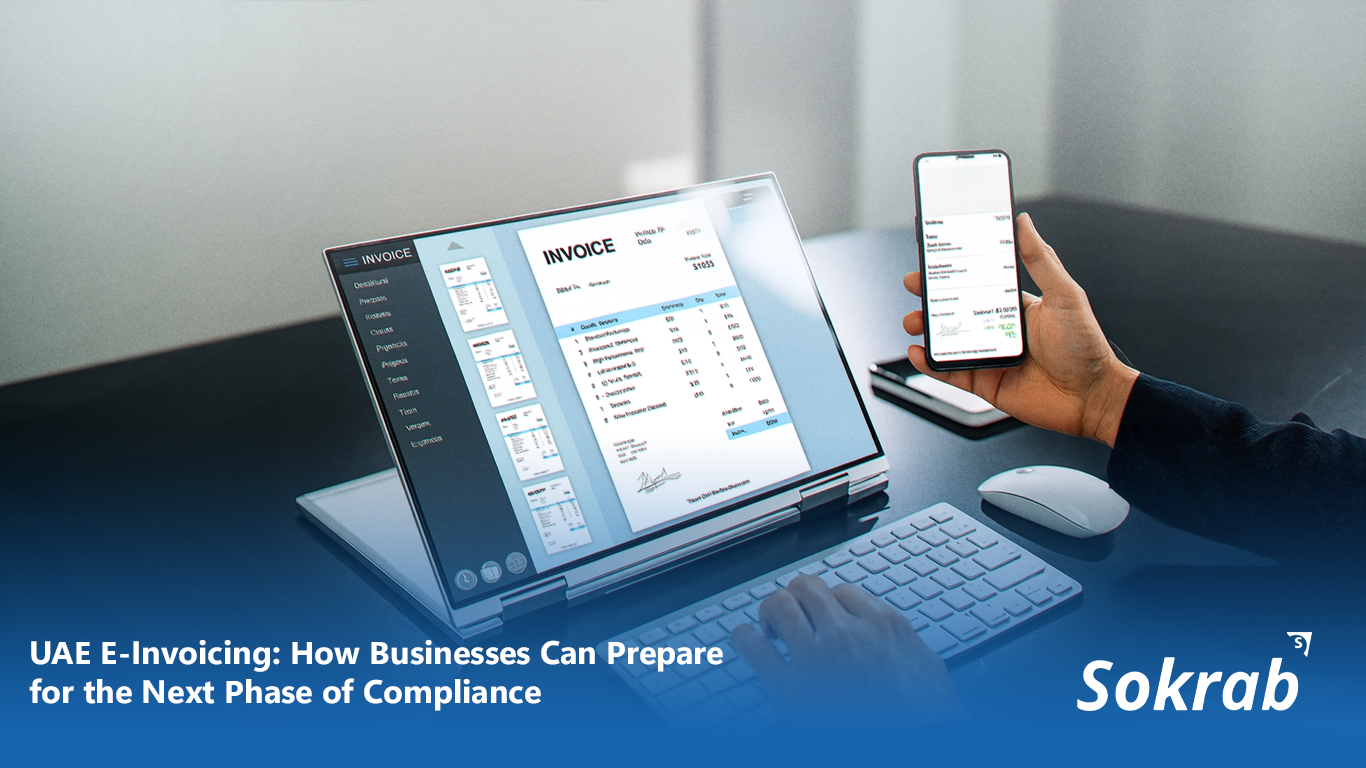
UAE E-Invoicing: How Businesses Can Prepare for the Next Phase of Compliance
The UAE is moving steadily toward the implementation of e-invoicing, transforming it from a future concept into a practical requirement for businesses. As regulatory developments continue, companies, especially those with higher turnover, are expected to align their systems and processes with the upcoming framework.
Many organizations assume that e-invoicing is purely a technical upgrade. However, in reality, it is a business transformation project that affects finance, tax, IT systems, and operational workflows.
What is Changing in the UAE?
E-invoicing in the UAE is being introduced in phases, with the Federal Tax Authority (FTA) leading the regulatory direction. The initial rollout is expected to focus on medium and large businesses, particularly those exceeding certain turnover thresholds.
The key objective is to move toward a digitally integrated invoicing environment, where invoices are generated, validated, and transmitted electronically in real time or near real time.
This shift is aligned with global standards and frameworks, including structured data formats and secure exchange mechanisms.
Why E-Invoicing is Important for UAE Businesses
E-invoicing is not only about compliance, it also offers significant operational benefits. When implemented correctly, it can:
- Improve VAT compliance and reporting accuracy
- Reduce manual errors and processing delays
- Enhance transparency in financial transactions
- Strengthen audit readiness
- Support automation and digital transformation
Businesses that prepare early will have a competitive advantage and avoid last-minute compliance pressure.
A Practical Approach to E-Invoicing Implementation
Many companies face challenges not because e-invoicing is complex, but because it is implemented without a structured plan.
Below is a practical framework that businesses in the UAE can follow:
1. Understand the Regulatory Requirements
The first step is to clearly understand the UAE e-invoicing regulations, including:
- Who is required to comply
- What data must be included in invoices
- How e-invoicing aligns with VAT rules
Early understanding helps businesses avoid compliance risks later.
2. Assess Current Invoicing Processes
Organizations should review how invoices are currently generated across different systems, including:
- ERP platforms
- Billing software
- Manual invoicing processes
This step helps identify inconsistencies and areas that require improvement.
3. Identify Gaps and Risks
Once current processes are mapped, businesses need to identify gaps such as:
- Missing mandatory invoice data
- Inconsistent VAT treatment
- Lack of automation or system integration
Addressing these gaps early is critical for a smooth transition.
4. Select the Right Implementation Approach
Businesses must decide how to implement e-invoicing from a technical perspective. This may involve:
- ERP upgrades
- Middleware solutions
- Integration with approved service providers
Choosing a scalable solution is essential for long-term compliance.
5. Clean and Standardize Data
Accurate data is the foundation of successful e-invoicing. Companies must ensure:
- Customer and supplier details are correct
- TRNs and tax codes are consistent
- VAT treatment is properly applied
Poor data quality can lead to invoice rejection and compliance issues.
6. Configure and Integrate Systems
Systems must be configured to meet UAE requirements, including:
- Invoice structure and format
- Tax calculation logic
- Integration with e-invoicing platforms
Seamless system integration ensures efficient processing without manual intervention.
7. Conduct Comprehensive Testing
Before going live, businesses should test:
- Invoice generation and submission
- VAT calculations
- Error handling and rejection scenarios
Testing ensures readiness and reduces operational disruptions.
8. Train Internal Teams
E-invoicing will change how finance and operations teams’ work. Proper training ensures that teams:
- Understand new workflows
- Can manage exceptions
- Maintain compliance
9. Go Live in Phases
A controlled rollout is recommended to minimize risk. Monitoring performance during the initial phase helps identify and resolve issues quickly.
10. Monitor and Improve Continuously
E-invoicing is not a one-time implementation. Businesses must continuously:
- Monitor compliance
- Update systems
- Adapt to regulatory changes
Over time, this leads to better efficiency and stronger financial control.
How Sokrab Supports E-Invoicing in the UAE
At Sokrab UAE, we support businesses through the full e-invoicing journey—from assessment to implementation and ongoing compliance.
Our services include:
We help businesses design practical solutions that are compliant, efficient, and aligned with UAE regulations.
Conclusion
E-invoicing in the UAE is no longer optional; it is an upcoming reality that will reshape how businesses manage invoicing and compliance.
Organizations that take a proactive and structured approach will not only meet regulatory requirements but also benefit from improved efficiency, automation, and financial transparency.
Preparing early is not just about compliance; it is about building a stronger and more resilient business.
E-invoicing works hand in hand with your VAT duties, so it helps to understand VAT registration in the UAE and how returns are filed.
Recent Posts
Post Categories
Need Forensic Accounting Support in the UAE?
Get reliable, FTA-compliant corporate tax and accounting support; tailored to your business, so you can grow with confidence